In the beginning was the 'Word'. Really? I think they left the 'l' out; it should say 'World'.
The beginning that we know about was 13.5 billion years ago when the 'Big Bang' created the current form of the universe, consisting of matter (including the mysterious 'dark' matter) and energy.Human
beings like us emerged in Africa only 200,000 years ago. This is the
equivalent of one day in our lifetime when compared to the lifetime of the Universe. Literally, one eyeblink of our lifetime is the equivalent of one human lifetime in the time since the Big Bang.
Our beginning could be dated from the
creation of the third planet from the Sun, Earth, some 4.5 billion years ago.
In the beginning was the Act; the spontaneous physical and chemical action of matter in motion, leading on Earth, to the biological evolution of life. Over nearly 4 billion years, the current lifegiving atmosphere (now 21 per cent oxygen) slowly developed. Initially, oxygen was as a waste product of the earliest photosynthesising, methane-consuming, cyanobacteria living in the oceans. Life created a new atmosphere which then led, in turn, to changes in the forms of life. Multi-cellular plant and animal life only developed after more than 3 billion years of single-cell life.
Climate, geological changes and astrological events affected the evolution of life causing accelerations, dormancy, and extinctions. Expansions and extinctions of life forms is the norm over the time scales on Earth.
Trees arrived on the scene at least 385 million years ago and grasses evolved 70 million years ago. From a mass extinction 200 million years ago arose the age of dinosaurs. Warm-blooded ancestors of mammals arrived around the same time. The dinosaurs were largely wiped out 65 million years ago by an asteroid strike, leaving space for the eventual mammalian domination of the Earth.
Hundreds of millions of years of multi-cellular evolution,
including many periods of mass extinctions,
eventually saw the ancestors of modern primates split from the ancestors
of modern rodents about 75 million years ago. There was nothing predetermined about us coming to be but we can look back and see how it happened.
It was only 6 million years ago, after 4,500,000,000 (4.5 billion) years of the existence of Earth and 4,000,000,000 (4 billion) years of the existence of life forms, that the last common ancestor of humans and our closest relatives, the chimpanzees and bonobos, went extinct and the ancestors of our ancestors appeared on the scene.
Species of humans (belonging to what is called the genus "homo"; the latin word for "man") have been around for about 2.5 million years. Homo habilis ("handy man") lived in East Africa for about a million years, along with other early human species. Homo erectus ("upright man") got around, and evidence of their existence has been found in Southern Africa, China and Indonesia. They lived from about 1.9 million years ago until just 110,000 years ago.
Homo sapiens ("wise man" - if only!) also evolved in East Africa, about 150,000 years ago. We, like our erectus cousins, had discovered the benefits of fire to cook food and we see the spread of our ancestors out of Africa into the Arabian peninsula and the Eurasian continent about 70,000 years ago. Yuval Noah Harari, writing in his book "Sapiens", marks the beginning of our human history from this time. "Fictive language", the 'Word', dates from this time.
Our Australian indigenous neighbours were amongst the first wave of Sapiens humans to leave Africa. They arrived in Australia up to 45-50,000 years ago.
Other species of Nenderthal and recently discovered Denisovan humans (sometimes the word "hominins" is used for other human species) seemingly interbred with our species, according to DNA evidence, although probably only as an exception. Around 50,000 years ago modern humans were definitely on separate evolutionary paths from our cousin human species. By 10,000 years ago we were the last human species standing. The small-sized human species on Flores Island, in Indonesia, died out a mere 12-13,000 years ago.
Today we homo sapiens stand as the dominating species of the Earth, on the brink of another mass extinction; an extinction event entirely of our own making, an extinction of thousands, if not millions, of species; an extinction of billions of human beings; an extinction of human life as we know it.
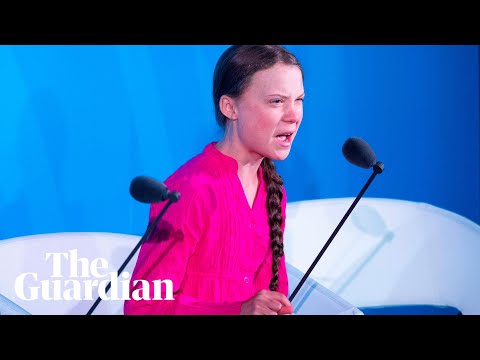
According to Greta Thunberg (and who would dare contradict her), “... hardly anyone ever mentions that we are in the midst of the sixth mass extinction, with about 200 species going extinct every single day.”
And I totally agree with her when she says,“...the climate and the biosphere don’t care about our politics and our empty words for a single second.” She could add that the Earth will go on, with or without us. Life, in different ways, will go on without us. There is no-one else outside of humanity who will care if we survive or not (except maybe the minature schnauzers).
It is entirely up to humanity to take control of the uncontrolled economic and societal forces driving us towards the abyss.



No comments:
Post a Comment
All comments will be moderated before being published